Central Compartment Atopic Disease: Why the Diagnosis Goes Beyond a CT Scan
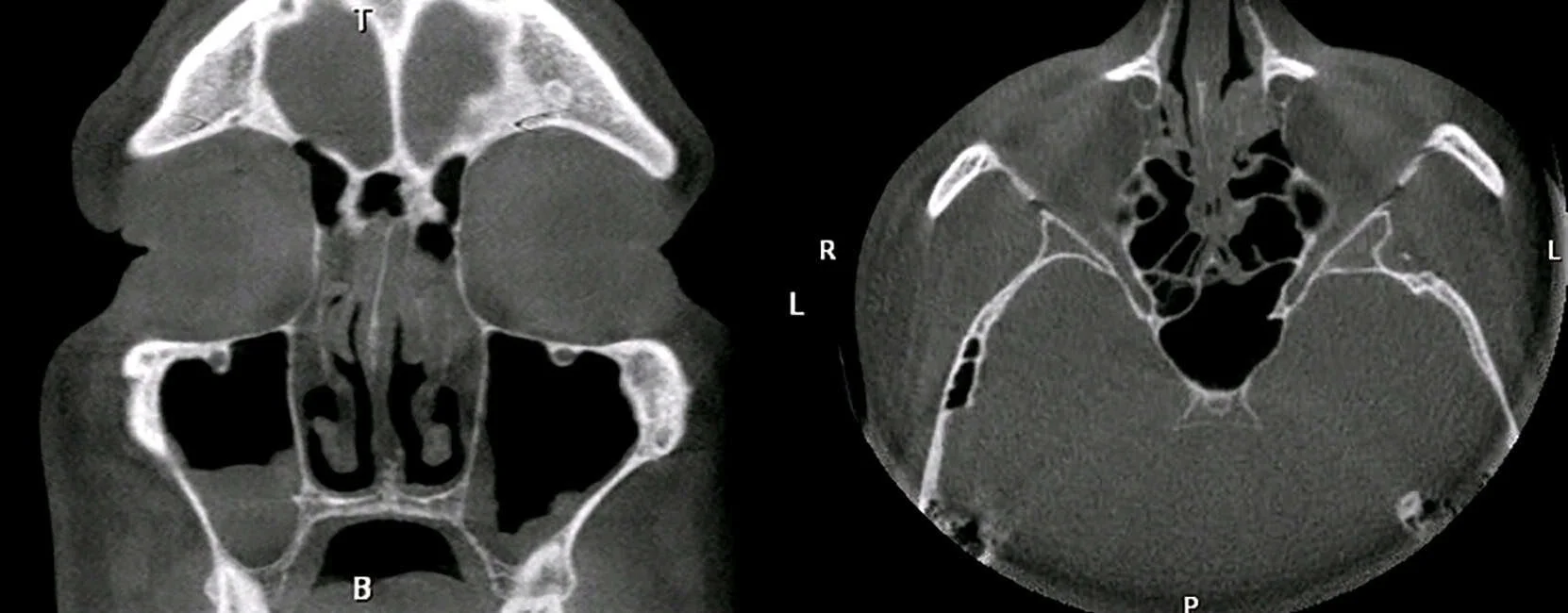
Central compartment atopic disease, or CCAD, is an allergy-associated form of chronic sinus disease. Its characteristic “black halo” appearance on CT can be helpful, but diagnosis depends on the history of allergy and where the tissue changes arise on nasal endoscopy. Recognising this pattern matters because treatment needs to address both the nasal obstruction and the underlying allergic response. Surgery may restore airflow and sinus drainage, while allergen immunotherapy can have an important role in longer-term care.
Central compartment atopic disease, or CCAD, is an allergy-associated form of chronic sinus disease. Its characteristic “black halo” appearance on CT can be helpful, but diagnosis depends on the history of allergy and where the tissue changes arise on nasal endoscopy. Recognising this pattern matters because treatment needs to address both the nasal obstruction and the underlying allergic response. Surgery may restore airflow and sinus drainage, while allergen immunotherapy can have an important role in longer-term care.
For further patient information about severe sinus disease and nasal polyps, visit Sydney Sinus Care, led by Professor Richard Harvey and Dr Peta-Lee Sacks.
Septal Perforation Repair: Why Closure Is No Longer Enough
Closing a septal perforation is only part of a successful repair. Crusting, bleeding and irritation can persist even when the hole has closed. Modern reconstruction aims to restore healthy nasal lining on both sides of the septum, using tissue with its own blood supply and, in selected cases, a thin mucosal graft. Protecting these surfaces during healing also matters. The goal is a stable, comfortable nose that stays closed and feels better.
Closing a septal perforation is only part of a successful repair. Crusting, bleeding and irritation can persist even when the hole has closed. Modern reconstruction aims to restore healthy nasal lining on both sides of the septum, using tissue with its own blood supply and, in selected cases, a thin mucosal graft. Protecting these surfaces during healing also matters. The goal is a stable, comfortable nose that stays closed and feels better.
Large Septal Perforations: Why “Too Big to Fix” Is No Longer the Right Answer
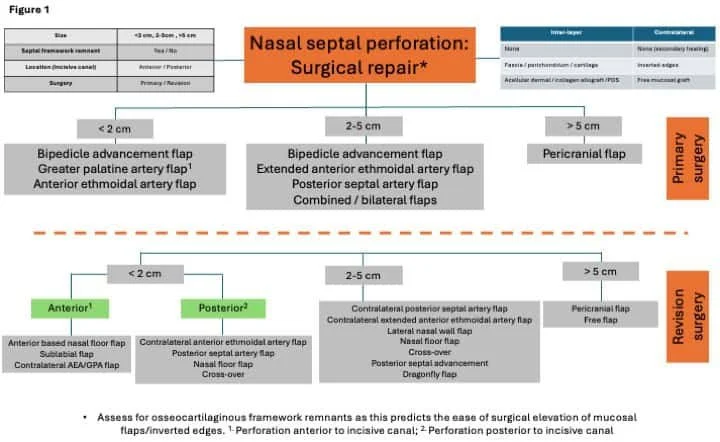
A large septal perforation is not automatically too big to repair. Size matters, but so do the health of the remaining nasal lining, its blood supply and any previous surgery. Modern repair uses living tissue with its own blood supply to reconstruct the septum, with different flap options for larger or more complex defects. Careful assessment and control of ongoing crusting or inflammation help determine whether repair is suitable. The aim is a more comfortable, functional nose—not simply closure of the hole.
A large septal perforation is not automatically too big to repair. Size matters, but so do the health of the remaining nasal lining, its blood supply and any previous surgery. Modern repair uses living tissue with its own blood supply to reconstruct the septum, with different flap options for larger or more complex defects. Careful assessment and control of ongoing crusting or inflammation help determine whether repair is suitable. The aim is a more comfortable, functional nose—not simply closure of the hole.
Why Immunotherapy Should Not Be the Last Step in Allergic Rhinitis
Persistent allergic rhinitis is often managed with sprays and antihistamines, but house dust mite allergy may last for decades. This article explains why allergen immunotherapy should be discussed earlier as a disease-modifying treatment strategy.
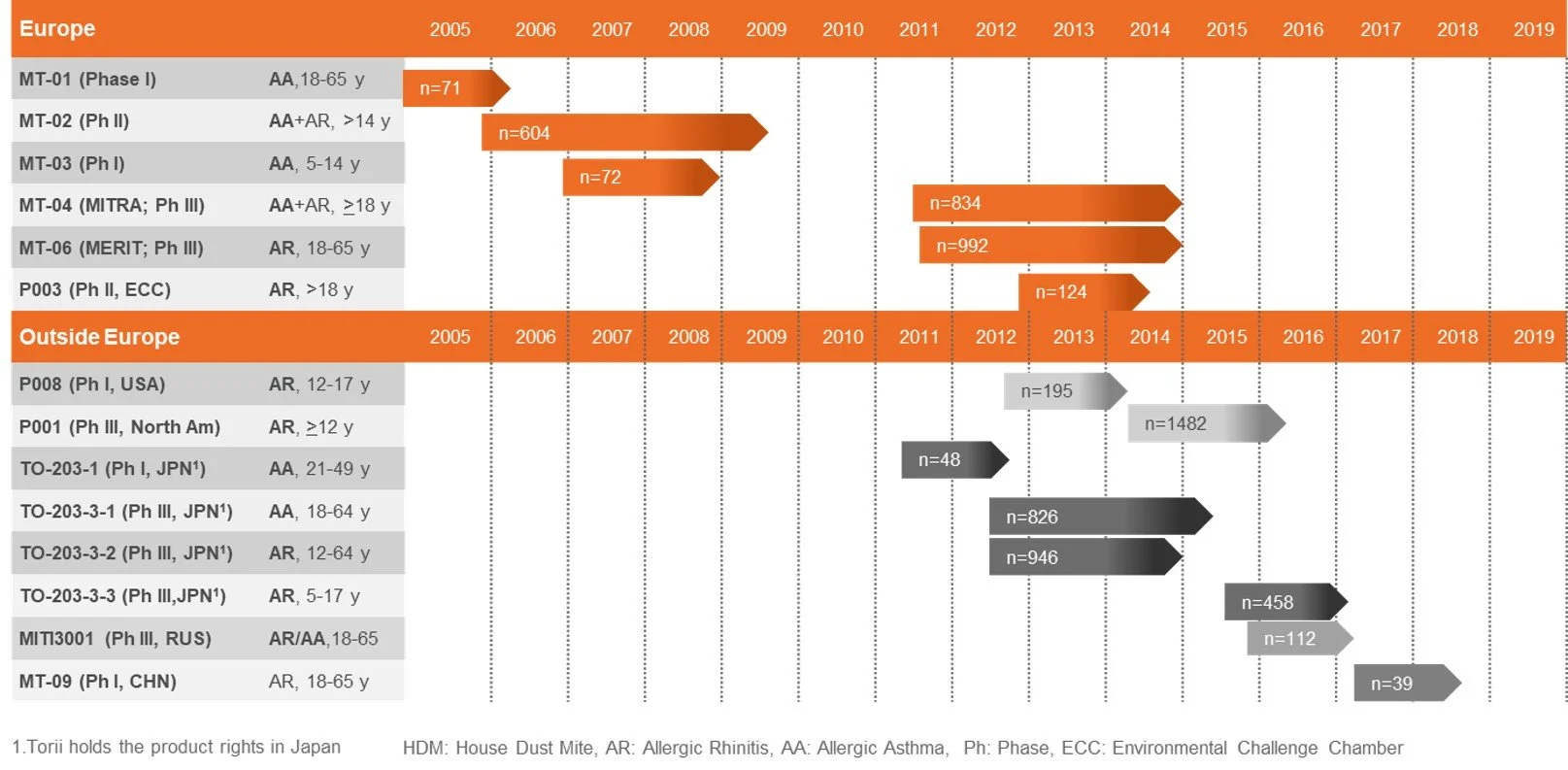
Sprays and antihistamines can help control allergic rhinitis, but persistent house dust mite allergy may last for years. Allergen immunotherapy aims to change the immune response to the allergen itself. For patients with ongoing symptoms or allergic tissue changes, it deserves an earlier place in the treatment discussion. Modern sublingual tablets make treatment more practical for many patients, while a long-term plan remains important even when surgery is needed.
Sydney Sinus Care explains the role of allergen immunotherapy in allergy-associated sinus disease and nasal polyps.
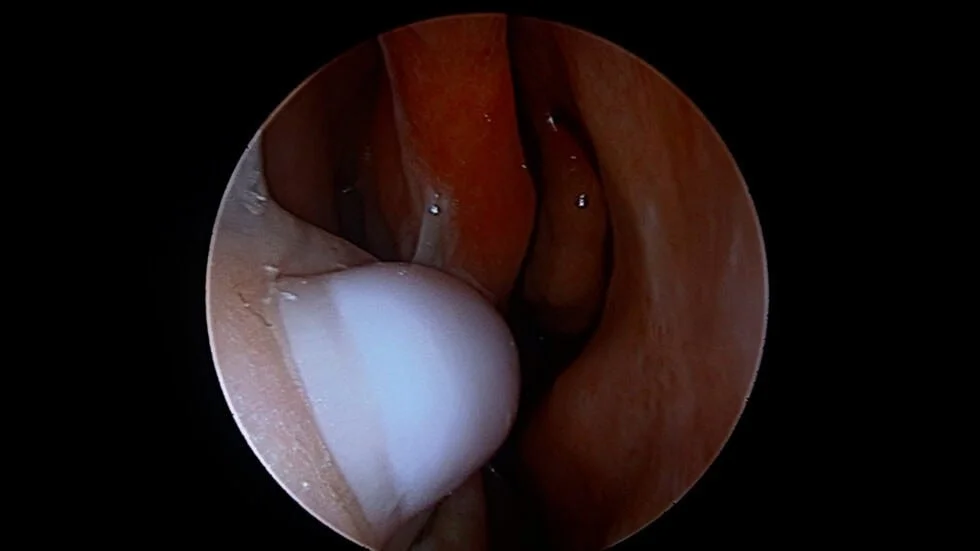
Nose Picking and Septal Perforations: Why Crusting Keeps Coming Back
Nose picking is common and usually harmless. But when the nasal lining is already injured, repeatedly removing a crust can reopen the wound and prevent healing. Dryness may start the problem; the crust–pick–crust cycle can keep it going. Recognising that cycle helps explain persistent septal crusting and some septal perforations—and why protecting the healing surface matters.
Nose picking is common and usually harmless. But when the nasal lining is already injured, repeatedly removing a crust can reopen the wound and prevent healing. Dryness may start the problem; the crust–pick–crust cycle can keep it going. Recognising that cycle helps explain persistent septal crusting and some septal perforations—and why protecting the healing surface matters.

Why ENT Surgeons Must Review Sinus CT Scans — Not Just the Report
Sinus CT reports often describe minor mucosal changes that may not represent disease. This article explains why ENT surgeons must review the actual images—and provides a practical radiology portal access tool.
Sinus CT reports often highlight minor changes that may not represent disease. This article explains why ENT surgeons need to review the actual images, not just the report, and includes a practical radiology image access tool for clinicians. Learn more here.
Radiology Image Access Finder
Select your state, then choose a radiology provider. The button will open the doctor / referrer image access portal.
Loading radiology access data...
Open Doctor / Referrer Image Access Portal
The Missing Cause of Nasal Obstruction
Professor Richard Harvey explains how the septal swell body can contribute to nasal obstruction, with a link to his full article on assessment and treatment.
Many patients with nasal blockage are treated for septal deviation or turbinate enlargement, yet symptoms persist. One commonly overlooked structure is the septal swell body—a dynamic, gland-rich area of the septum that enlarges in allergy and contributes to airflow resistance. Evidence shows that treating it alongside standard surgery improves outcomes.

Why a Constant Runny Nose Isn’t Always Allergy
Professor Richard Harvey explains why a persistent watery nose is not always allergy, with a link to his full article on posterior nasal nerve treatment.
A persistent watery nose is often treated as allergy—but in many patients, it’s driven by overactive nerve signals within the nose. Modern treatment now targets these pathways directly through posterior nasal nerve surgery. Importantly, another overlooked structure—the septal swell body—also contributes to mucus production. Addressing both offers a more complete and durable solution.

Why Surgery Still Matters in the Era of Biologics
Professor Richard Harvey explains the complementary roles of sinus surgery and biologic therapy, with a link to his full article on chronic rhinosinusitis.
Biologic therapies have transformed the treatment of chronic sinusitis with nasal polyps—but they don’t replace surgery. The best outcomes are seen when surgery restores sinus function and biologics control inflammation. This combined approach shifts the goal from symptom relief to true disease control and remission.
Sydney Sinus Care provides further information about biologic medicines for nasal polyps, including how they fit alongside surgery and daily corticosteroid irrigation.

Why “Sinusitis” Is No Longer Enough
Professor Richard Harvey explains why precise classification matters in chronic rhinosinusitis, with a link to his full article on personalised treatment.
The term “chronic sinusitis” is outdated and overly simplistic. Modern understanding recognises multiple disease subtypes with different causes and treatments. Moving toward precise classification allows better treatment decisions, particularly with the rise of biologic therapies and personalised medicine.